Translation Gem · Kyojuro Rengoku
Why VIZ's "SOME HASHIRA I AM!" Nails 柱として不甲斐なし!!
VIZ transforms a formal Japanese self-reproach into an inverted English idiom that hits just as hard—proof that knowing when to abandon literalism is the mark of a master translator.

Japanese (manga)
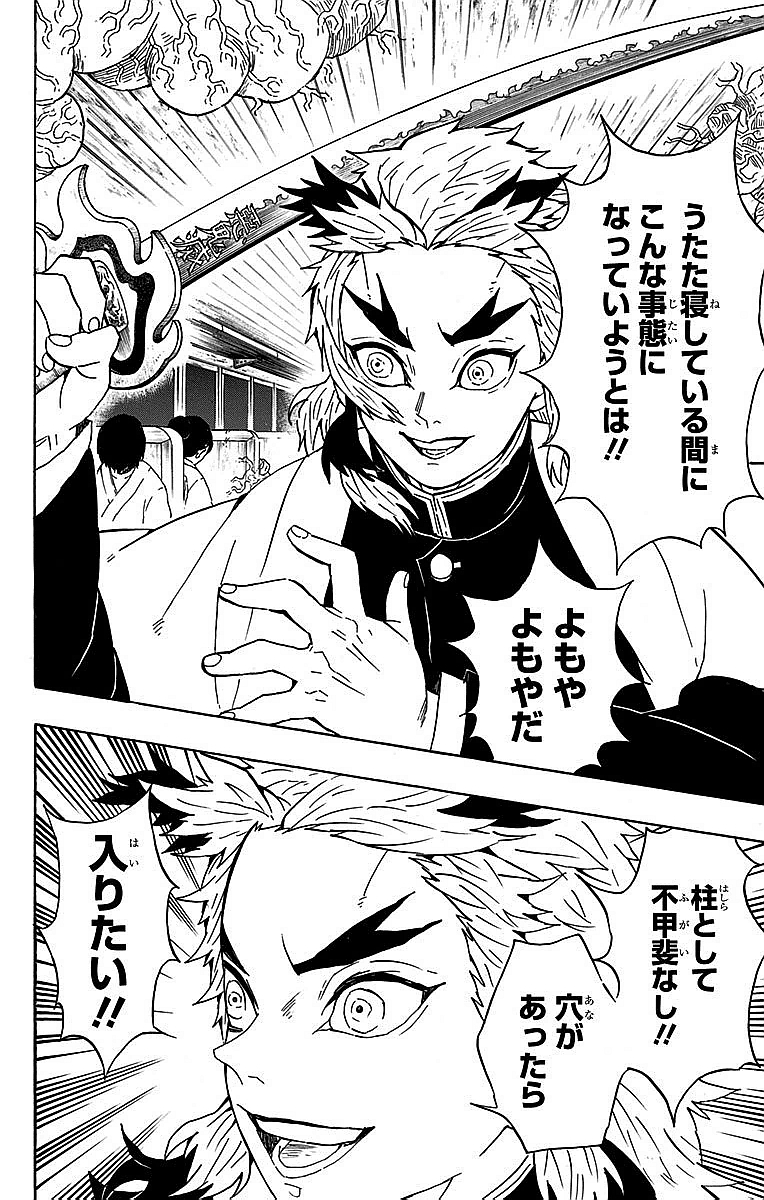
鬼滅の刃 第7巻 p.162 ©吾峠呼世晴/集英社
English (VIZ official)
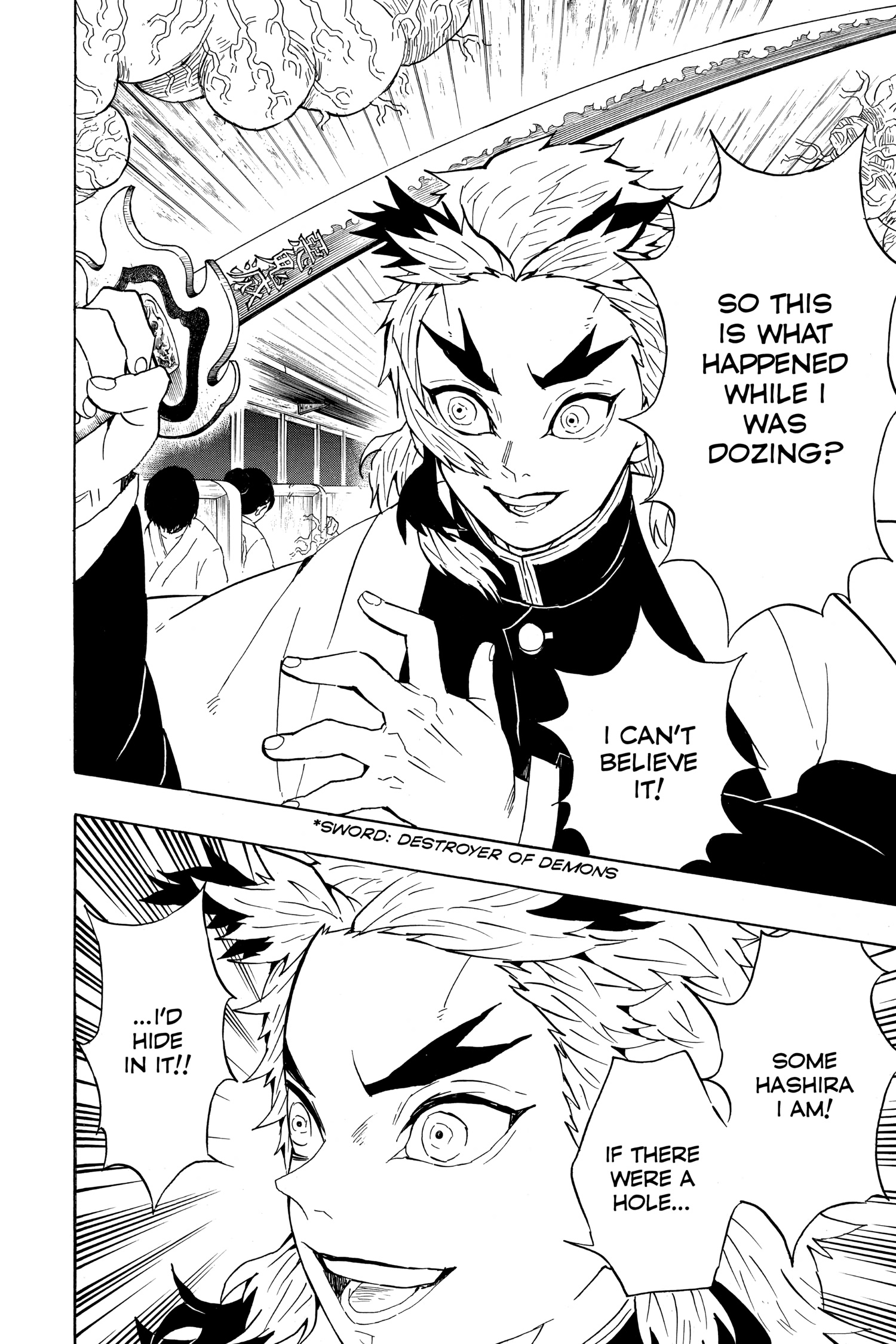
Demon Slayer Vol. 7 (VIZ Media), p.162 ©Koyoharu Gotouge/VIZ Media
Japanese (manga)
柱として不甲斐なし!!
hashira to shite fugainashi
鬼滅の刃 Vol. 7, p.162
English (VIZ official) — ✓ nails it
"SOME HASHIRA I AM!"
Demon Slayer Vol. 7 (VIZ), p.162
Literal meaning
柱 (hashira) means "pillar" and refers to the nine elite demon slayers who lead the Corps. として (toshite) is a particle meaning "as" or "in the capacity of," marking the role being evaluated. 不甲斐なし (fugainashi) is a classical adjective: 不 (fu-) is a negating prefix, 甲斐 (gai) means "worth" or "effect," and なし is the classical copula form meaning "without" or "lacking." Word-for-word: "As a Hashira, [I am] without worth." The implied first-person subject is omitted, as is standard in Japanese.
Why this translation works
"SOME HASHIRA I AM!" deploys an English idiom that carries identical emotional payload: the construction "Some X I am!" is a self-deprecating exclamation expressing bitter failure to live up to one's role. A literal rendering like "I am pathetic as a Hashira" conveys the meaning but lands flat—it reports self-criticism rather than performing it. The inverted word order in the English mirrors how the Japanese front-loads the role (柱として) before delivering the self-indictment. Both sentences build toward the emotional climax: in Japanese it's the stark 不甲斐なし; in English it's the ironic stress on "I AM." VIZ's all-caps typesetting further matches the intensity of the double exclamation marks, ensuring the line reads as an anguished cry rather than a mumbled admission.
Translation techniques used
Idiomatic substitution with syntactic parallel—VIZ swaps the literal adjective for the "Some X I am!" construction, which preserves the front-loaded role + trailing verdict structure of the Japanese. Typographic intensity matching—all-caps conveys the emotional force of !! without requiring additional punctuation. Ellipsis retention—both versions omit the explicit subject, trusting context to supply the speaker.
Register & tone alignment
The Japanese uses 不甲斐なし, a classical/literary adjective form (なし vs. modern ない), lending gravity befitting a proud warrior in crisis. The English "SOME HASHIRA I AM!" is idiomatic rather than archaic, but achieves similar weight through its dramatic inversion and capitalization. Both versions sit at an elevated emotional register—not casual self-pity but the anguished outcry of a man who has sworn to protect others and believes he has failed.
One small thing the English doesn't carry
The classical なし ending marks the Japanese as slightly more formal/literary than everyday speech—a nuance the English idiom doesn't explicitly signal. The loss is minimal: the idiom's inherent drama compensates, and modern readers would likely miss the classical flavor anyway.
Honesty hedge: we flag this only because it's there — not because the translation falls short.

Sources
Linguistic analysis grounded in primary sources
- [manga_volume] 鬼滅の刃 Vol. 7, page 162
How this was made: a Japanese Demon Slayer otaku hand-picked the insight from a massive bilingual database pairing every original Japanese line with its official English edition. AI then translated and wrote up the analysis from those source quotes — every Japanese / English excerpt above is a byte-exact capture from the cited manga editions, not invented.