Translation Pitfall · Kyojuro Rengoku
You See "UN-KNOWING FIRE", We See Ocean Ghosts: The True Meaning of First Form
A classical term for mysterious sea lights, rendered awkwardly as "UN-KNOWING FIRE!" and losing its cultural resonance.

Japanese (manga)
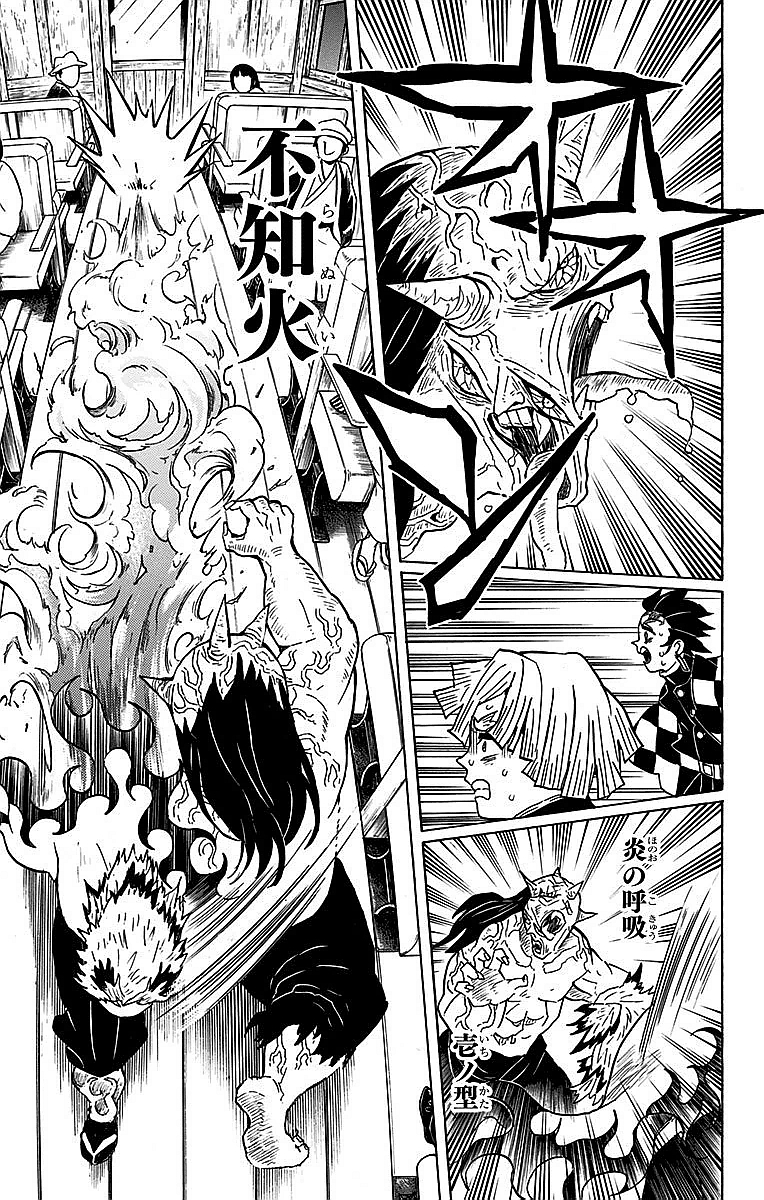
鬼滅の刃 第7巻 p.43 ©吾峠呼世晴/集英社
English (VIZ official)
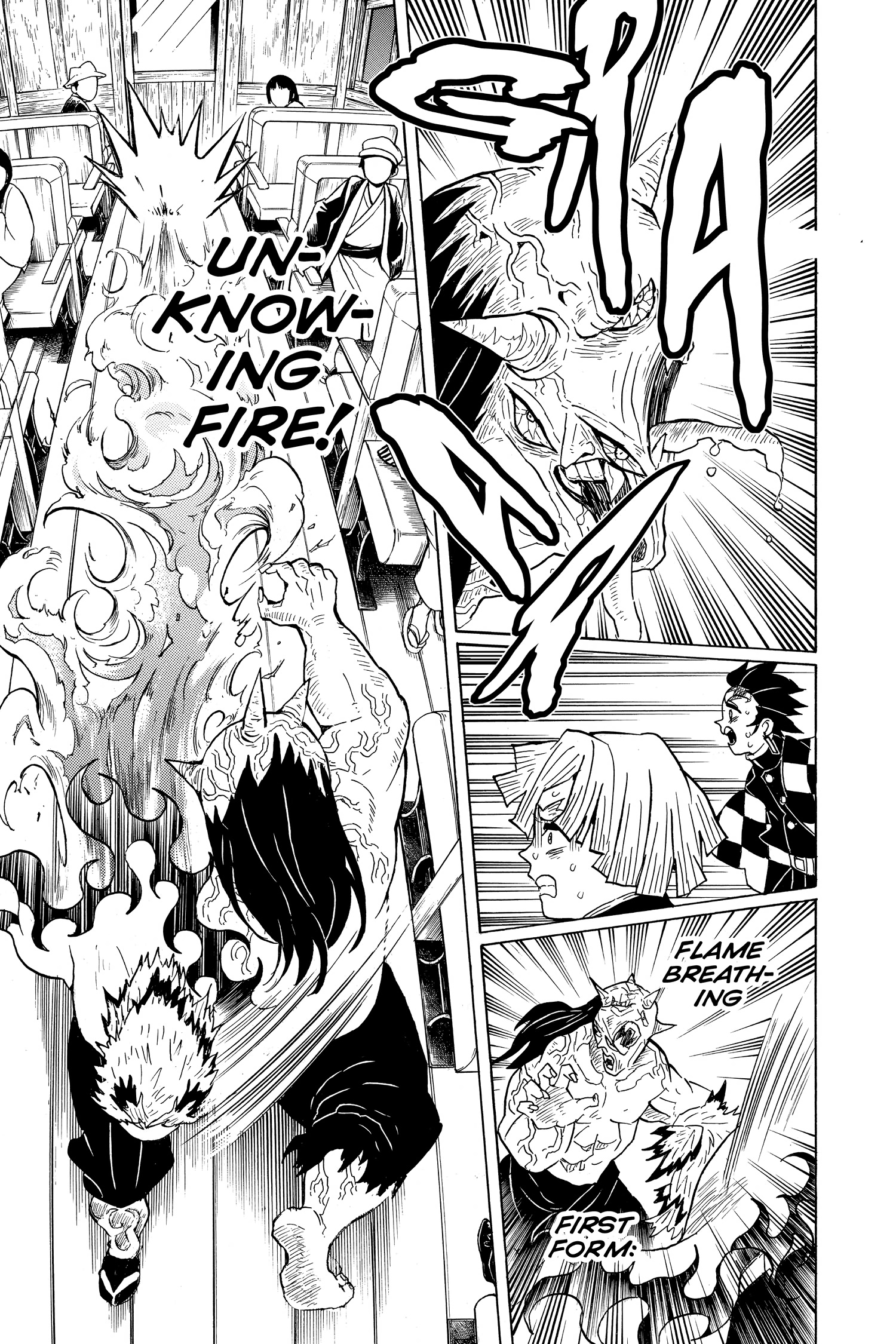
Demon Slayer Vol. 7 (VIZ Media), p.43 ©Koyoharu Gotouge/VIZ Media
Japanese (manga)
炎の呼吸 壱ノ型 不知火
shiranui
鬼滅の刃 Vol. 7, p.43
English (VIZ official)
"FLAME BREATHING FIRST FORM UN-KNOWING FIRE!"
Demon Slayer Vol. 7 (VIZ), p.43
Literal meaning
The word 不知火 (shiranui) is etymologically derived from classical Japanese 知らぬ (shiranu), the attributive negative form of 知る (shiru, "to know"), combined with 火 (hi, "fire"). The literal meaning is thus "unknown fire" or "fire that is not known." The kanji breakdown: 不 (fu/bu, negation) + 知 (chi, knowledge) + 火 (ka/hi, fire). However, the reading しらぬい is a jukujikun (熟字訓), where the entire compound takes a native Japanese reading rather than being read character-by-character in on'yomi.
Register & tone
The term 不知火 carries a distinctly archaic, literary register. The embedded classical negative form 知らぬ (rather than modern 知らない) signals antiquity and gravitas, appropriate for naming martial techniques in the context of traditional breathing styles. It evokes written classical Japanese, poetry, and folklore rather than everyday speech. The word suggests mystery and the supernatural—something beyond human understanding—making it fitting for a combat technique meant to appear almost otherworldly in its execution.
Cultural context
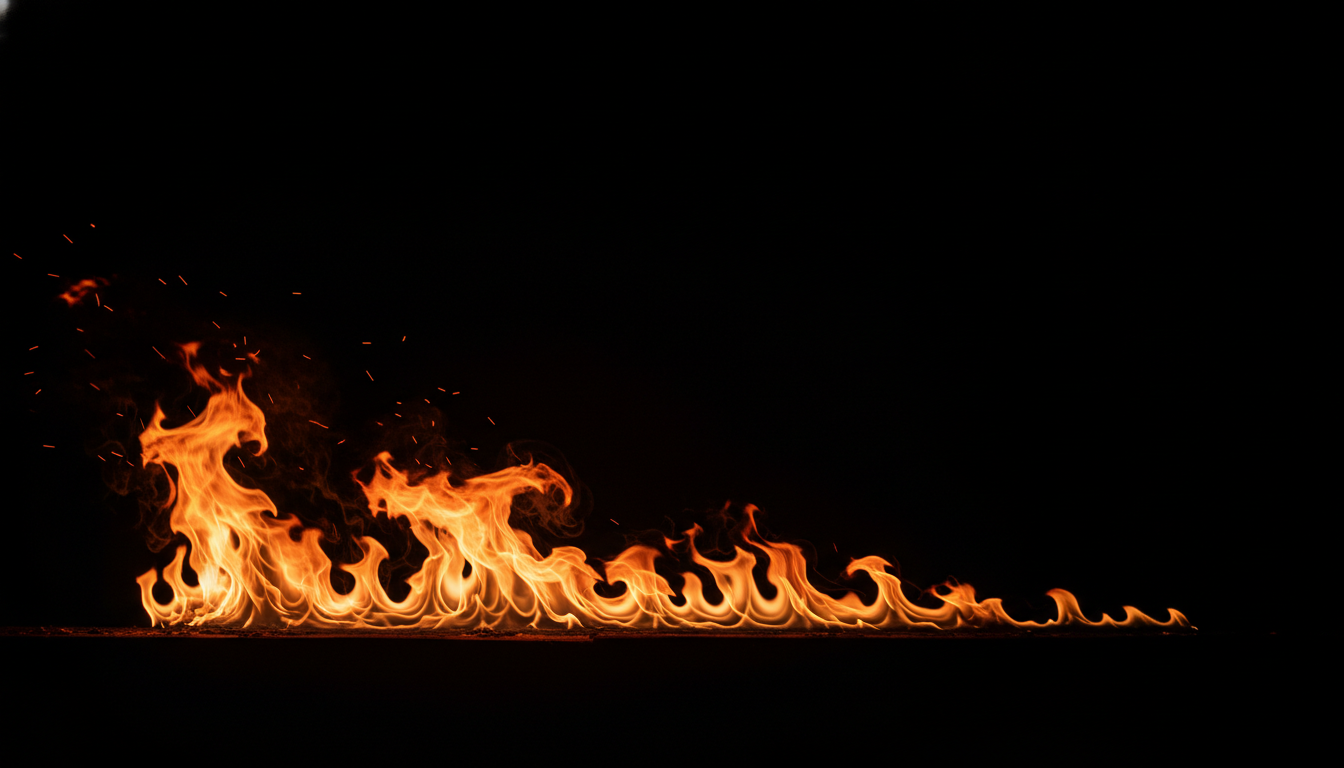
不知火 (shiranui) refers to a famous atmospheric optical phenomenon observed over the Ariake Sea in Kyushu, particularly near Shimabara Bay. These mysterious flickering lights, appearing to dance above the water's surface, have been documented since ancient times. The phenomenon is caused by atmospheric refraction of distant fishing boat lights under specific temperature conditions, but traditional explanations attributed it to supernatural causes—yokai, dragon fire, or spirits of the drowned. The town of Shiranui in Kumamoto Prefecture takes its name from this phenomenon, and shiranui appears throughout Japanese folklore, literature, and art. For a Japanese audience, the word immediately conjures images of ethereal flames hovering over dark water—an image that maps perfectly onto a Flame Breathing technique's swift, flickering attack pattern.
Why the English version misses the mark
The VIZ rendering "UN-KNOWING FIRE!" fails on multiple levels. First, "un-knowing" is not natural English—the hyphenated construction feels forced and creates confusion about whether it means "lacking knowledge" or "causing others not to know." English speakers do not use "unknowing" as an adjective for inanimate objects in this way. More critically, the translation obliterates the cultural reference entirely. A Japanese reader encountering 不知火 immediately visualizes the famous Ariake Sea phenomenon: spectral flames flickering over dark waters. This evocative imagery—mysterious, beautiful, and vaguely supernatural—is precisely what the technique name invokes. "UN-KNOWING FIRE!" gives English readers none of this; it reads as a clumsy literal gloss rather than a resonant technique name. The all-caps styling and exclamation mark attempt to compensate for lost gravitas but only add artificial bombast.
Alternative translations
- Shiranui (untranslated, with gloss: 'phantom sea-fire')
- Unknown Fire
- Phantom Flames
- Ghost Fire
- Will-o'-the-Wisp
- Sea Phantom Fire
Sources
Linguistic analysis grounded in primary sources
- [manga_volume] 鬼滅の刃 Vol. 7, page 43
How this was made: a Japanese Demon Slayer otaku hand-picked the insight from a massive bilingual database pairing every original Japanese line with its official English edition. AI then translated and wrote up the analysis from those source quotes — every Japanese / English excerpt above is a byte-exact capture from the cited manga editions, not invented.